2020+ Polaris RZR Pro XP | Engine Tuning By PPEI
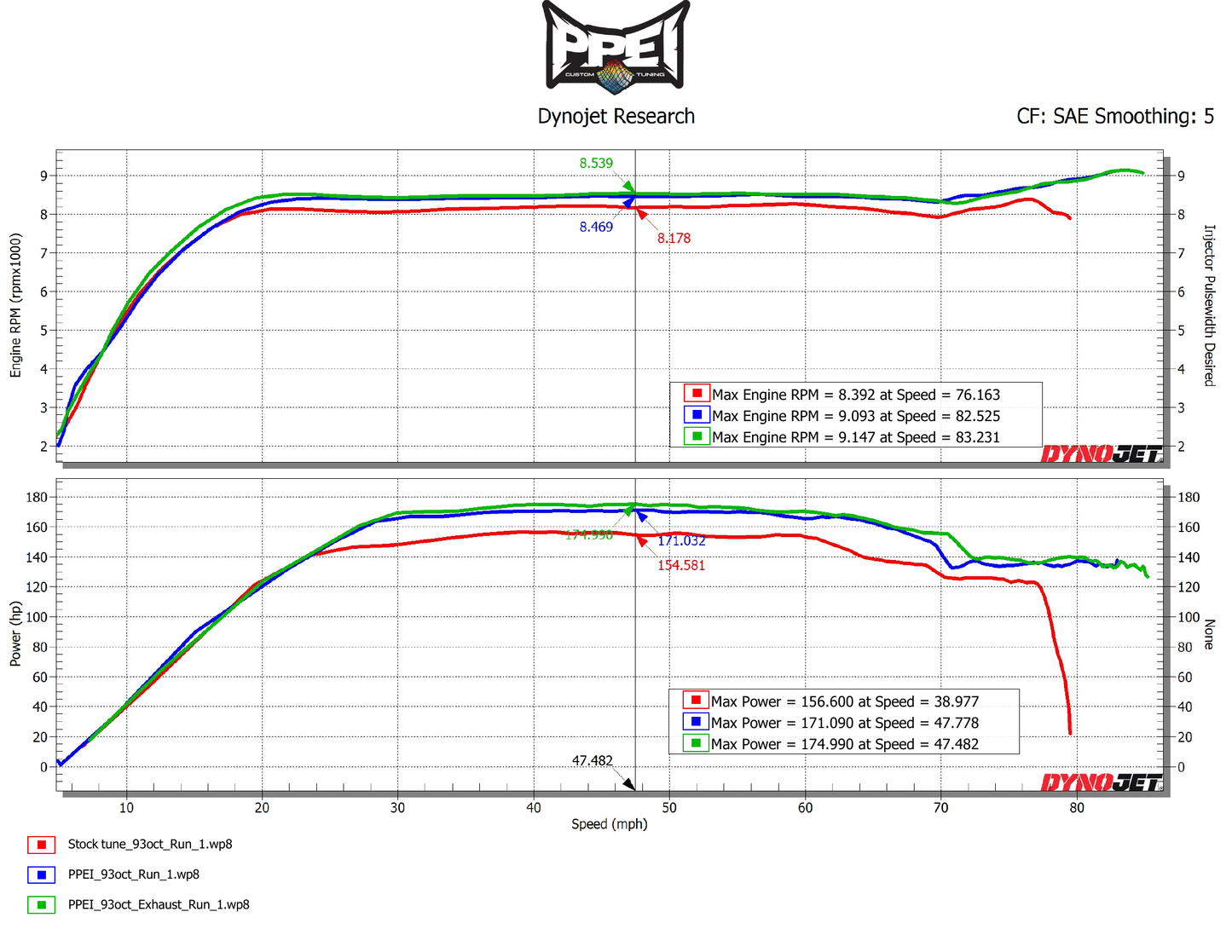
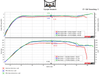
Dynojet — Stock vs PPEI vs PPEI+exhaust (Pro XP)
2020+ Polaris RZR Pro XP | Engine Tuning By PPEI
Dynojet — Stock vs PPEI vs PPEI+exhaust (Pro XP)

2020+ Polaris RZR Pro XP | Engine Tuning By PPEI

PP-P-PRO-XP-ET

The 2020+ Polaris RZR Pro XP leaves measurable performance in the factory calibration. Polaris publishes 181 hp at the engine, but an OEM crank rating does not show how much power reaches the tires. PPEI tested this platform on its Dynojet chassis dyno and verified the improvement with validated 0-60 mph runs.

Performance Results

  • OEM reference: Polaris publishes 181 hp at the engine. This is a crank rating, not a wheel measurement.
  • Stock dyno baseline: 156.600 wheel hp.
  • PPEI 93-octane calibration: 171.090 wheel hp with the stock exhaust, a gain of 14.490 hp at the wheels.
  • PPEI 93-octane calibration with exhaust: 174.990 wheel hp, a gain of 18.390 wheel hp over stock and 3.900 wheel hp over the tuned stock-exhaust result.
  • Stock tune and clutch: 5.23 seconds from 0-60 mph and 270.83 feet to reach 60 mph.
  • PPEI tune with stock clutch: 4.81 seconds from 0-60 mph and 242.46 feet to reach 60 mph. That is 0.42 second quicker and 28.37 feet shorter than stock.
  • PPEI tune with upgraded clutch: 4.73 seconds from 0-60 mph and 238.49 feet to reach 60 mph. That is 0.50 second quicker and 32.34 feet shorter than stock.

This is not a launch trick. The stock-clutch tuned machine was still at 1.31 seconds from 0-20 mph, compared with 1.28 seconds stock. By 30 mph, PPEI had moved ahead. The advantage then grew to 0.14 second at 40 mph, 0.26 second at 50 mph, and 0.42 second at 60 mph. That pattern shows where the calibration earns its keep on a Pro XP. It keeps the turbocharged engine pulling harder after the initial hit, where the factory machine begins giving up time.

Owners do not have to build the entire machine to feel the difference. PPEI tuning delivers the largest measured improvement on the stock clutch, then supports the additional hardware when the build progresses. The result is a Pro XP that accelerates harder through the useful speed range and makes better use of the turbocharged power already under the seats.

The calibration can be flashed with the Dynojet Power Vision 3, part number PV3-1907C, or an HP Tuners RTD4 with the H-002-08 Polaris OBDII adapter cable. No separate wideband option is required because the Pro XP is already equipped with a wideband sensor.

Regular price
Regular price Sale price
Sale Sold out
Shipping calculated at checkout.

Polaris RZR Pro XP stock tune and clutch recording a 5.23-second 0-60 mph Dragy run

This validated Dragy report establishes what the RZR Pro XP does before PPEI changes the calibration. With the stock tune and clutch, the machine recorded 5.23 seconds from 0-60 mph and traveled 270.83 feet before reaching 60 mph. The split times were 1.88 seconds to 30 mph2.70 seconds to 40 mph, and 3.77 seconds to 50 mph. The run was recorded at 88°F2,087 feet of density altitude, and a slight -0.36% slope.


This baseline matters because the factory 181 hp rating is measured at the engine, not at the tires, and it does not explain how the Pro XP actually accelerates. The stock report gives owners a real reference point. It shows exactly how much time and distance the factory calibration needs to move this specific model from a stop to 60 mph.

PPEI-tuned Polaris RZR Pro XP with the stock clutch recording a 4.81-second 0-60 mph run

This report isolates the value of the PPEI calibration because the machine still uses the stock clutch. The PPEI-tuned Pro XP recorded 4.81 seconds from 0-60 mph and reached 60 in 242.46 feet. Compared with the stock baseline, the calibration removed 0.42 second and 28.37 feet from the run.

The split times explain why the tune matters for this platform. The PPEI run did not gain its advantage with a harder launch. It reached 20 mph in 1.31 seconds, compared with 1.28 seconds stock. The tuned machine moved ahead by 30 mph, reaching that mark in 1.84 seconds instead of 1.88 seconds. Its lead then increased through every remaining split: 2.56 versus 2.70 seconds to 40 mph3.51 versus 3.77 seconds to 50 mph, and 4.81 versus 5.23 seconds to 60 mph.

The tuned result was also recorded at 90°F and 2,381 feet of density altitude, while the stock baseline was recorded at 88°F and 2,087 feet. The PPEI-calibrated machine ran quicker even though its report shows the higher density altitude. For a Pro XP owner, this is the important difference. The calibration keeps adding speed after the launch instead of letting the acceleration flatten as the machine moves through the midrange.

PPEI-tuned Polaris RZR Pro XP with an upgraded clutch recording a 4.73-second 0-60 mph run

This validated Dragy report shows the quickest tested combination: PPEI tuning with the upgraded clutch. The Pro XP recorded 4.73 seconds from 0-60 mph and needed only 238.49 feet to reach 60. Compared with the stock tune and clutch, that is an exact improvement of 0.50 second and 32.34 feet.

The improvement builds through the entire run. The machine reached 30 mph in 1.80 seconds, 40 mph in 2.52 seconds, and 50 mph in 3.50 seconds. The stock baseline required 1.882.70, and 3.77 seconds to reach the same speeds. By 60 mph, the PPEI-tuned and clutched combination had opened the full half-second advantage.

The test conditions make the result more meaningful. This run was recorded at 88°F2,108 feet of density altitude, and a positive 0.55% slope. The fastest time came on a slight uphill grade, while the stock baseline showed a slight downhill grade. The upgraded clutch improves how the machine applies the calibration, but the comparison with the 4.81-second stock-clutch run also keeps the claim honest. The clutch accounts for the final 0.08 second, while PPEI tuning delivers the majority of the measured improvement.

For a Pro XP owner planning a clutch upgrade, this image shows that the calibration and clutch should work as a package. The clutch helps put the added power to the ground, while the PPEI file supplies the stronger pull that continues through 60 mph.

Dyno comparison of a Polaris RZR Pro XP producing 156.600 wheel hp stock, 171.090 wheel hp with PPEI tuning, and 174.990 wheel hp with PPEI tuning and an exhaust

This Dynojet comparison shows wheel horsepower, which is the power measured where the tires meet the dyno. The red stock run produced 156.600 wheel hp. The blue run with PPEI's 93-octane calibration produced 171.090 wheel hp, an exact gain of 14.490 wheel hp. The green run with PPEI tuning and an exhaust produced 174.990 wheel hp, which is 18.390 wheel hp above stock and 3.900 wheel hp above the PPEI-tuned stock-exhaust result.
The curves matter as much as the peak numbers. The PPEI-tuned blue and green traces remain above the stock red trace through most of the measured pull. That means the calibration is not creating one narrow spike for a headline. It is adding usable wheel power across the speed range where a Pro XP is accelerating.
The comparison also shows that the calibration creates most of the measured gain before the exhaust is added. Owners with a stock exhaust can still move from 156.600 to 171.090 wheel hp. Owners who add an exhaust have a PPEI calibration developed for that configuration and can reach the tested 174.990 wheel hp result. This gives a Pro XP owner a useful upgrade path instead of forcing unnecessary hardware purchases before tuning the machine.
Polaris publishes 181 hp at the engine for this platform. That OEM crank figure should not be compared directly with the PPEI wheel figures. The dyno image answers the question that matters after the tires, clutch, and drivetrain are involved: how much more power does the PPEI-calibrated machine actually put down?

WHO IS THE TUNER/CALIBRATOR

PPEI, also known as Power Performance Enterprises, Inc., is led by the business owner and lead calibrator/tuner Kory Willis. PPEI began calibrating/tuning back in 2008, specializing in Diesel Performance but has since expanded into the Gas and Powersports industries. Kory and the team at PPEI have set many world records along with continuing many industry “firsts”. We take pride in knowing that Kory not only prides his work, but also thoroughly enjoys setting expectations high for our team so our customers can have the best products available in the world.